You Don’t Need a Funeral Home to Say a Meaningful Goodbye
When a loved one chooses direct cremation, many families are surprised to discover just how much flexibility they have in how — and when — they hold a memorial. Direct cremation is the most affordable end-of-life option available in Canada, and one of its greatest advantages is that it separates the practical process of cremation from the act of remembrance.
That means the memorial is entirely yours to plan. There is no funeral director required. No expensive rental of a chapel. No pressure to purchase packages you don’t need. Instead, your family can take the time to plan something personal, thoughtful, and truly reflective of the person you’ve lost.
This guide is for Canadian families who want to understand exactly how to do that.
Why Families Are Choosing Direct Cremation + a Family-Led Memorial
The cost of a traditional funeral in Canada can range from $8,000 to $15,000 or more, depending on the province. Direct cremation typically costs between $1,000 and $2,500 — and holding your own memorial service adds little to nothing on top of that.
Beyond cost, a family-led memorial offers something that a standard funeral package rarely can: complete personalization. You choose the location, the music, the speakers, the timing, and the tone. Many families find this approach more healing and more authentic than a formal, scheduled service at a funeral home.
Step 1: Give Yourself Permission to Wait
One of the most important things to understand after a direct cremation is that you are not in a rush. Unlike a burial, which typically must occur within days, cremated remains can be kept safely at home or in a secure location for weeks, months, or even longer.
This means you can plan your memorial for a date that works for family members who may need to travel. You can wait for a season that felt meaningful to your loved one — perhaps their favourite time of year. Or you can simply give your family time to grieve before gathering to celebrate a life.
There is no right timeline. The memorial will take place when your family is ready.
Step 2: Choose a Memorial Service Location That Feels Right
The location of a memorial sets the tone for everything that follows. Here are some of the most popular and practical options for Canadian families:
At Home
A gathering in a family home is one of the most intimate and cost-free memorial options available. It works especially well for smaller groups and allows family members to contribute food, flowers, photos, and personal touches that a rented venue never could. A backyard, living room, or even a porch can become a truly meaningful space for remembrance.
A Community or Recreation Centre
Most Canadian communities have municipal halls, recreation centres, or community rooms that can be rented for a modest fee — often between $50 and $200 for a few hours. These spaces are practical for larger gatherings and typically offer tables, chairs, and kitchen access. Contact your local municipality or community association to inquire about availability.
A Park, Garden, or Natural Setting
Canada’s national and provincial parks, botanical gardens, and public green spaces offer beautiful, meaningful backdrops for a memorial. Many families choose an outdoor location that held special significance for their loved one — a favourite hiking trail, a lakeside spot, or a garden they tended. For gatherings in public parks, check whether your municipality requires a permit for groups over a certain size.
A Place of Worship
If your loved one had a faith connection, many churches, mosques, synagogues, temples, and other places of worship are willing to host memorial services for members of their community — and sometimes for non-members as well. There may be a small fee or a voluntary donation expected, but this is often far less than the cost of a funeral home chapel rental.
A Favourite Restaurant, Pub, or Gathering Place
For a loved one who valued community and good company, booking a private dining room or reserved section at a restaurant or pub they loved can be a wonderful way to celebrate their life. Many establishments are experienced in hosting these types of events and can work with your family to create food and beverage packages.
A Legion Hall or Club
For veterans or long-time community members, Royal Canadian Legion branches and fraternal clubs across the country often make their halls available for memorial gatherings, often at low or no cost to members’ families.
Step 3: Plan the Service Itself
A family-led memorial service or celebration of life doesn’t need to follow a rigid script. In fact, the most memorable services are often the most relaxed. Here is a simple framework your family can adapt:
Welcome and Opening Words
Designate one family member or trusted friend to open the gathering. This doesn’t need to be a formal speech — even a few warm words of welcome and gratitude for everyone attending sets a meaningful tone.
Sharing Stories and Memories
Invite anyone who wishes to share a memory, a story, or simply a few words about your loved one. You might gently ask a few people in advance to avoid any uncomfortable silence, but leaving space for spontaneous sharing is often where the most powerful moments happen.
Music
Music is one of the most powerful parts of any memorial. Create a playlist of songs that mattered to your loved one and play it softly throughout the gathering, or choose specific songs for particular moments. A family member or friend with musical talent might offer to play or sing something meaningful.
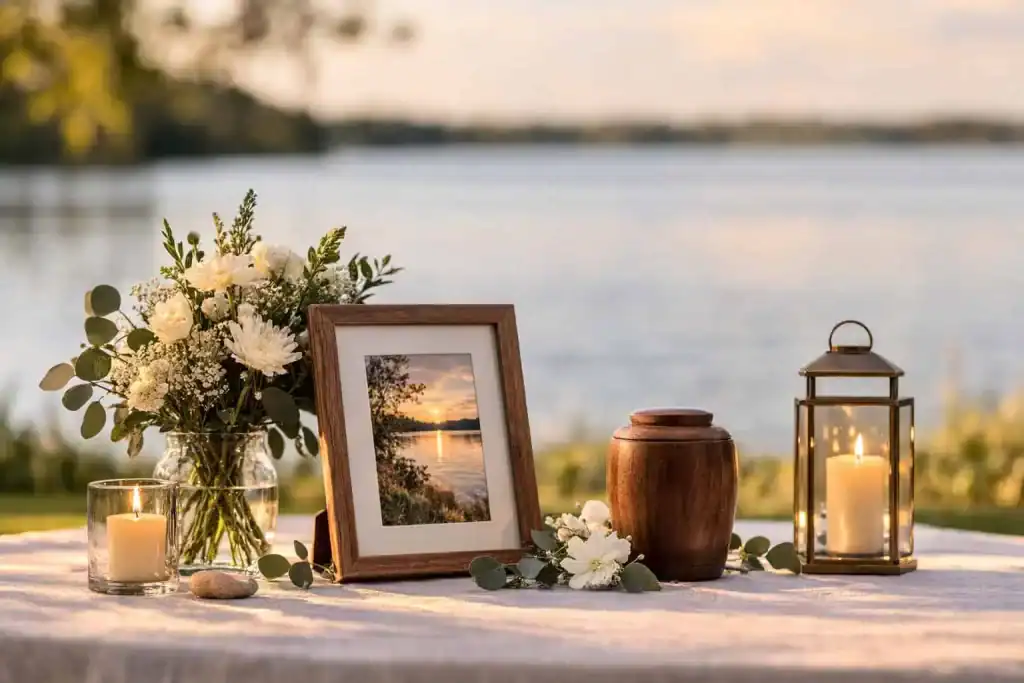
A Photo Display or Memory Table
Collecting photographs, objects, or mementos that represent your loved one’s life gives attendees something to gather around and reflect on. A simple display on a table — no formal equipment required — can be deeply moving.
A Reading or Poem
A favourite passage from a book, a poem, a piece of scripture, or even a letter written by your loved one can be a beautiful part of the service. Assign this to someone who is comfortable reading aloud.
Closing Ritual
Consider ending with a small collective gesture — lighting a candle, releasing a flower into water, a moment of silence, or a toast. These brief rituals give the gathering a sense of completion and help attendees transition gently out of the memorial space.
Step 4: Handle the Practical Details
A family-led memorial is simpler to coordinate than most families expect. Here is a checklist of the practical elements to consider:
- Invitations: A simple message by phone, email, or a free platform like Evite or Facebook Event is entirely sufficient. Printed cards are a lovely touch, but not necessary.
- Food and refreshments: Potluck-style gatherings where family and friends each bring a dish are common and meaningful. Alternatively, a simple spread of sandwiches, baked goods, and beverages is perfectly appropriate.
- An order of service: A single printed or digital page outlining the flow of the memorial helps attendees follow along and serves as a keepsake. Free templates are available through Canva and similar platforms.
- Audio: For outdoor or larger indoor gatherings, a portable Bluetooth speaker is usually sufficient. For larger venues, ask if a sound system is available.
- Guest book: A simple journal or blank book where attendees can write a memory or message for the family is a meaningful keepsake that costs very little.
What to Do With the Ashes
The memorial is also a natural time to address what will happen with your loved one’s cremated remains. Canadian families have several options:
- Keep them at home in a meaningful urn or container
- Scatter them in a location that held significance — see our guide on ash scattering in Canada for regulations by province
- Inter them in a cemetery or columbarium niche
- Divide them among family members who each wish to keep a portion
- Transform them into a memorial object, such as a piece of jewellery or a memorial diamond
There is no requirement to decide immediately. Many families hold the ashes for some time before determining what feels right.
A Note on Grief
Planning and hosting a memorial can be both healing and emotionally exhausting. It is normal to feel sadness, relief, joy, and grief all at once during this kind of gathering. Give yourself and your family permission to feel all of it.
If the weight of grief feels overwhelming at any point, Canada’s Canadian Virtual Hospice and GriefLine offer free support resources for bereaved families.
Frequently Asked Questions
Start by choosing a location that feels meaningful — this could be your home, a park, a community hall, or a place your loved one cherished. Then decide on a simple structure for the gathering: a welcome, time for sharing memories, music, and a closing gesture. You don’t need a funeral director or a formal venue. Most family-led memorials after cremation are low-cost, personal, and deeply meaningful. This guide walks you through every step.
Yes, absolutely. There is no legal requirement in Canada to use a funeral home for a memorial service. Once the body has been cared for — through direct cremation or burial — the memorial or celebration of life is entirely up to the family. You can hold it at home, in a park, at a restaurant, in a place of worship, or anywhere that feels right. No licence or permit is required for a private gathering on private property.
There is no required timeline. Unlike a burial, which typically takes place within days of death, cremated remains can be kept safely for weeks, months, or longer. Many families wait until all close relatives can travel, or until a meaningful season arrives. Some hold a small immediate gathering and a larger celebration of life later. The memorial happens when your family is ready — not when a schedule demands it.
Canadian families have many options: at home, in a backyard, at a community or recreation centre, in a national or provincial park, at a favourite restaurant or pub, in a place of worship, or at a Legion hall. Outdoor public spaces may require a permit for larger groups — check with your local municipality. The best location is one that felt meaningful to your loved one or that brings your family comfort.
No. In Canada, a funeral home is not required to hold a memorial service. Funeral homes handle the legal and physical care of the body — embalming, cremation, or burial — but the memorial or celebration of life is a separate event that families can plan entirely on their own. Choosing direct cremation and then hosting your own family-led memorial is a completely legal, increasingly common, and often far more personal approach to honouring a loved one.
You Have Everything You Need
A meaningful memorial doesn’t require a large budget, a formal venue, or a professional officiant. It requires love, a little planning, and the willingness to gather together and remember.
Direct cremation gives Canadian families the freedom to grieve on their own timeline and celebrate a life in their own way. That freedom is one of its most valuable gifts.
If you are looking for affordable direct cremation services in your area, DFS Memorials can help you find trusted providers across Canada. Direct cremation services from $845 in Vancouver, BC