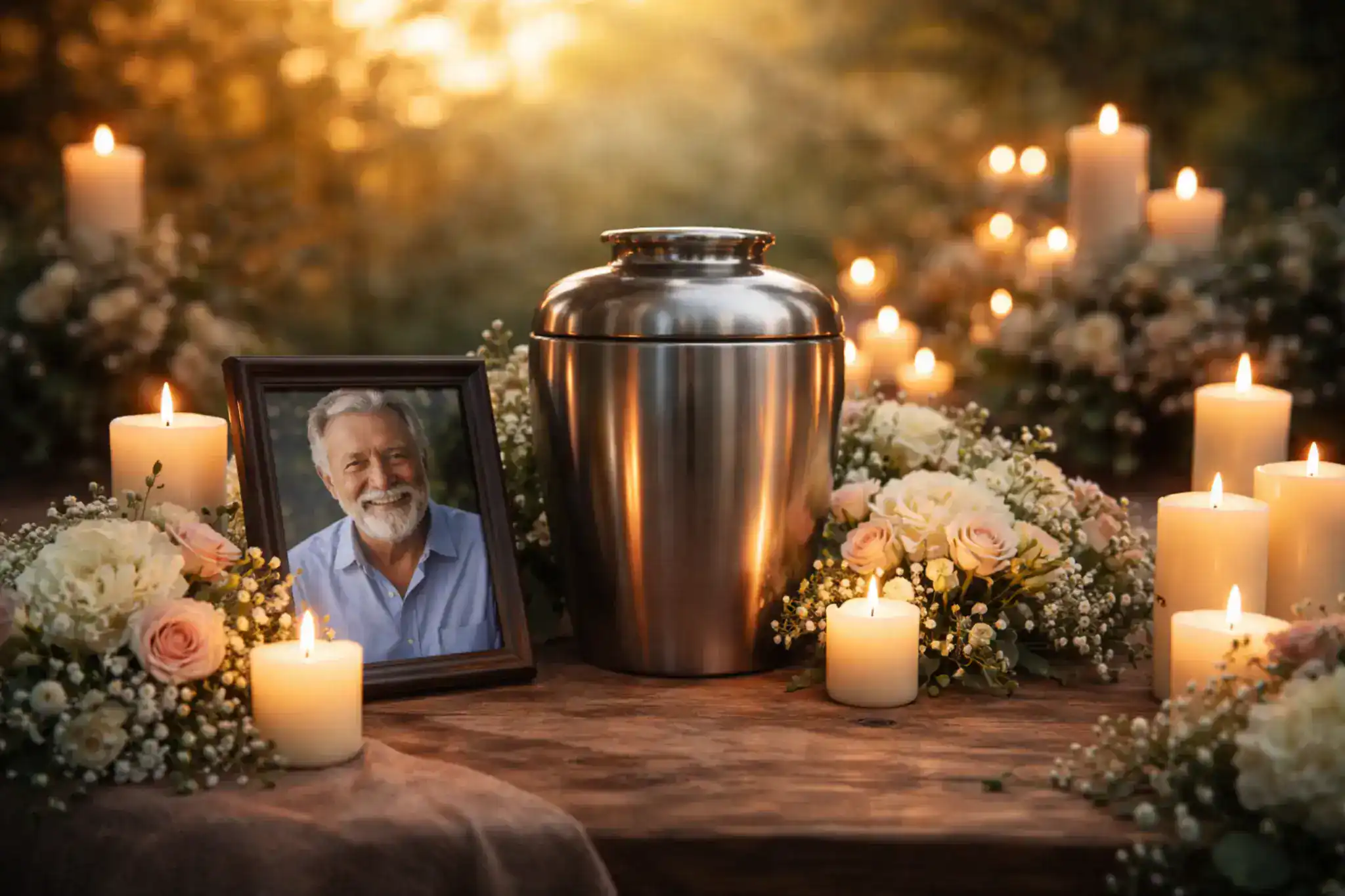
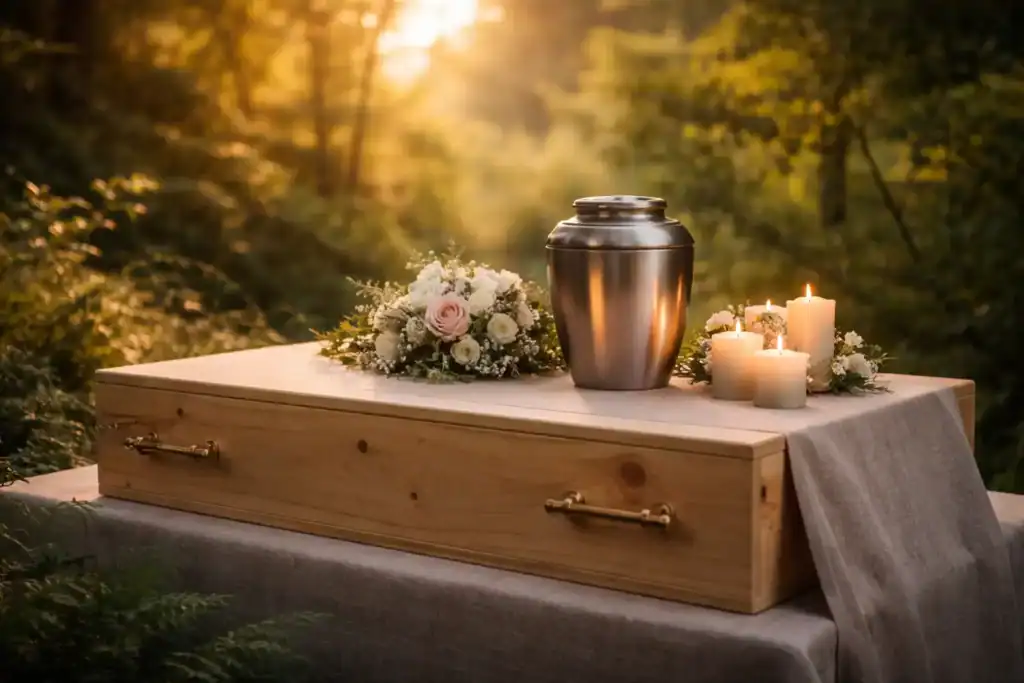
After a cremation, one of the first decisions a family faces is choosing an urn for their loved one’s cremated remains. It can feel like an overwhelming task at an already difficult time — and yet it is also a deeply personal opportunity to find something that truly reflects the person you are honouring.
This guide is designed to remove the uncertainty from the process. Whether you are choosing an urn immediately after a direct cremation, planning ahead, or looking for a meaningful keepsake, we have covered everything you need to know — from materials and sizes to prices and where to buy.
Do You Need to Buy an Urn From the Funeral Home?
No. This is one of the most important things to know before you begin. Funeral homes and cremation providers in Canada are legally required to accept urns purchased from any source — they cannot insist you buy from them, and they cannot charge a handling fee for using your own urn.
Funeral homes typically offer a selection of urns, which is convenient at a stressful time. However, purchasing directly from an urn retailer — either online or in person — often provides a wider selection at lower prices. Taking a little time to compare your options is worthwhile.
If the cremated remains are returned in a temporary container before you have chosen a permanent urn, there is no urgency to decide immediately. The remains can be stored safely in the interim container for as long as needed.
What Size Cremation Urn Do I Need?
Urn size is measured in cubic inches, and as a general rule of thumb, one pound of a person’s body weight corresponds to approximately one cubic inch of cremated remains. An average adult will produce between 150 and 250 cubic inches of cremated remains, so a standard adult urn with a capacity of 200 cubic inches will accommodate most adults comfortably.
| Urn Type | Typical Capacity | Best For |
|---|---|---|
| Standard Adult Urn | 180–250 cubic inches | Full cremated remains of one adult |
| Companion Urn | 400+ cubic inches | Cremated remains of two people (couples) |
| Keepsake Urn | 3–50 cubic inches | A small portion of remains; shared among family members |
| Child or Infant Urn | Up to 50 cubic inches | Cremated remains of a child or infant |
| Scattering Urn | 200+ cubic inches | Designed for easy scattering; biodegradable options available |
If you plan to divide the cremated remains among family members, consider purchasing one standard urn and several smaller keepsake urns. Many families do this to allow each person to have a physical memorial of their own.
Types of Cremation Urns: Materials and Styles
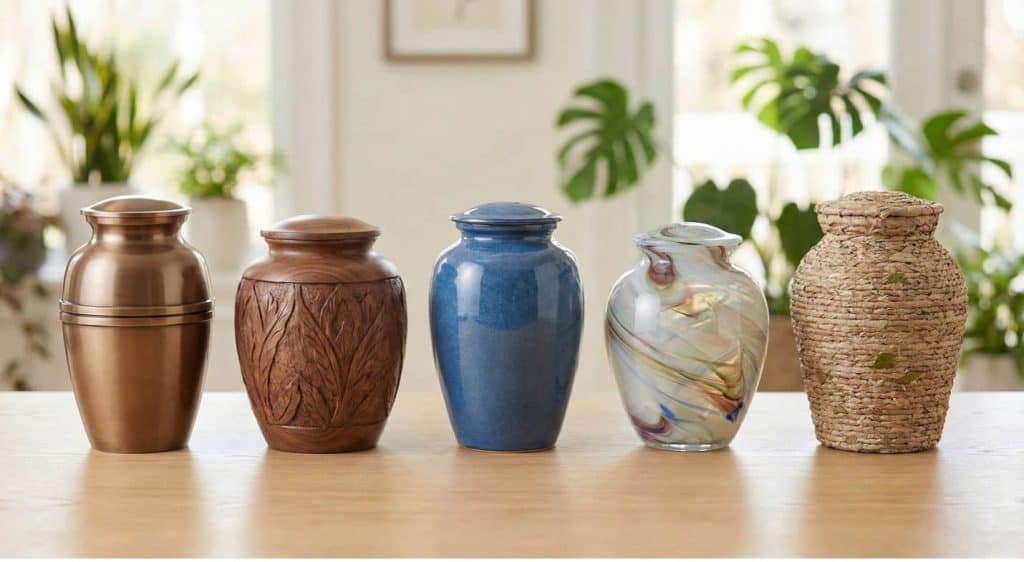
Urns are available in a wide range of materials, each with different aesthetic qualities, price points, and practical considerations. Here is an overview of the most common options available in Canada.
Wood Urns
Wood urns are among the most popular choices in Canada, valued for their warmth, natural appearance, and craftsmanship. They are typically handcrafted from hardwoods such as maple, walnut, cherry, oak, or rosewood, and can be finished, engraved, or inlaid with artwork.
Price range: $80–$600+
Best for: Display at home, columbarium interment, or scattering (biodegradable options exist)
Considerations: Wood can warp if exposed to moisture over time; not suitable for water scattering unless specifically biodegradable
Metal Urns
Metal urns — typically made from brass, bronze, aluminium, or stainless steel — are durable, long-lasting, and available in a wide variety of finishes and designs. Brass urns are a traditional choice and hold up well over time, while aluminium offers a lighter and more affordable alternative.
Price range: $60–$500+
Best for: Long-term display, columbarium niches, or burial
Considerations: Heavier than other materials; not suitable for water scattering
Ceramic and Pottery Urns
Ceramic urns are handcrafted and often highly distinctive — no two are identical. They are available in a vast range of colours, glazes, and forms, from simple and understated to highly artistic. Many Canadian artists produce beautiful ceramic urns that serve as genuine works of art as well as memorial vessels.
Price range: $100–$800+
Best for: Display at home; a meaningful and personal tribute
Considerations: Fragile; handle with care; not suitable for scattering or burial
Biodegradable Urns
Biodegradable urns are designed to break down naturally over time, making them the appropriate choice for families planning to scatter ashes at sea, bury remains in a natural burial ground, or inter them in a scattering garden. They are typically made from materials such as compressed paper, bamboo, recycled cellulose, or plant-based composites.
Some biodegradable urns — sometimes called “living urns” — are designed to be planted with a tree seed, creating a living memorial from the cremated remains.
Price range: $30–$250
Best for: Water scattering, green burial, or garden interment
Considerations: Not intended for long-term indoor display; check product specifications for water dissolution time
Glass Urns
Hand-blown glass urns are among the most visually striking memorial options available. Each is unique, and the play of light through coloured glass can be genuinely beautiful. They are primarily display pieces, treasured as much for their artistic quality as their function.
Price range: $150–$1,000+
Best for: Home display as a lasting art piece
Considerations: Fragile; requires careful handling and storage
Stone and Marble Urns
Stone urns — carved from marble, granite, onyx, or other natural stone — are among the most durable and permanent options. They are heavy, substantial, and convey a timeless sense of gravitas. Marble urns in particular are often chosen for outdoor display or columbarium interment.
Price range: $100–$700+
Best for: Columbarium niches, outdoor memorial gardens, or long-term indoor display
Considerations: Very heavy; may require additional support for shelving
How Much Does a Cremation Urn Cost in Canada?
Urn prices in Canada vary enormously depending on the material, craftsmanship, and where you purchase. The table below gives a broad overview of what to expect in 2025–2026.
| Material | Entry-Level | Mid-Range | Premium / Artisan |
|---|---|---|---|
| Wood | $80–$150 | $150–$350 | $350–$600+ |
| Metal (brass / bronze) | $60–$120 | $120–$300 | $300–$500+ |
| Ceramic / Pottery | $100–$200 | $200–$400 | $400–$800+ |
| Glass (hand-blown) | $150–$250 | $250–$500 | $500–$1,000+ |
| Stone / Marble | $100–$200 | $200–$400 | $400–$700+ |
| Biodegradable | $30–$80 | $80–$150 | $150–$250 |
| Keepsake (small) | $20–$60 | $60–$120 | $120–$300+ |
Note: Funeral homes typically charge a markup of 30–100% over wholesale urn prices. Purchasing directly from a specialist urn retailer or online often provides significant savings for equivalent quality.
For context on the overall cost of cremation services in Canada, see our Cremation Costs in Canada 2026 guide, which covers prices by province and city.
What Will You Do With the Cremated Remains?

One of the most important questions to consider before choosing an urn is what you plan to do with the cremated remains. The intended use will significantly influence which type of urn is most appropriate.
- Keeping at home: Any urn style works. Focus on something that feels right in your home and reflects your loved one’s personality. Wood, ceramic, and glass urns are popular for home display.
- Columbarium interment: Check the columbarium’s size restrictions before purchasing — niches vary in dimension, and some have strict maximum sizes. Metal, stone, and wood urns are all commonly used.
- Burial in the ground: If the urn is to be buried, a biodegradable urn is the most eco-conscious choice. Metal urns can also be buried, but they will not decompose.
- Scattering ashes: If you plan to scatter the ashes — at sea, in a meaningful outdoor location, or via drone ash scattering — a biodegradable or scattering-specific urn is the practical choice. Water-soluble urns are designed to dissolve cleanly at sea.
- Dividing among family members: Consider a combination of one full-size urn and several keepsake urns so that multiple family members can each have a portion of the remains.
- Memorial jewellery or keepsakes: A small amount of cremated remains can be incorporated into jewellery, glass beads, or memorial diamonds. These require only a tiny portion of the total remains and are used alongside a standard urn.
Personalisation and Engraving of Urns

Many urns can be personalised with engraving, artwork, or custom finishes. Common engravings include the person’s name, dates, a short quote, or a meaningful symbol. Most urn retailers offer engraving as an add-on service, typically at an additional cost of $30–$100, depending on the complexity.
Some families choose to commission a fully custom urn — particularly from ceramic or glass artists — as a truly one-of-a-kind tribute. This takes more time to arrange, so it is worth planning ahead if a custom piece is important to you.
Photo urns — which incorporate a printed or engraved photograph of the deceased — are also available and are particularly popular for home display.
Where to Buy a Cremation Urn in Canada
There are several routes to purchasing an urn in Canada, each with different trade-offs in terms of price, selection, and convenience.
- Through the funeral home or cremation provider: Convenient and immediate, but typically the most expensive option. The selection is often limited to what they stock. You are not required to buy here.
- Online urn retailers: The widest selection and most competitive prices. Reputable Canadian and international retailers ship quickly — many offer next-day or two-day delivery within Canada. Look for retailers that clearly state dimensions and capacity.
- Local artisans and craftspeople: A beautiful option for families who want something truly unique. Canadian potters, woodworkers, and glass artists produce exceptional urns. Expect longer lead times for custom commissions.
- Memorial shops and monument companies: Many companies that produce headstones and grave markers also carry a selection of urns, particularly stone and metal options.
Urns for Special Circumstances
Pet Urns
Pet cremation is increasingly common in Canada, and a wide range of urns are available specifically for pets, in sizes appropriate for animals ranging from small birds to large dogs. Many of the same material options — wood, ceramic, metal, biodegradable — are available in pet-specific designs.
Companion Urns for Couples
A companion urn — also called a double urn — is designed to hold the cremated remains of two people, typically a couple who have chosen to remain together. They are available in all the same materials as standard urns and are a meaningful choice for spouses or life partners.
Military and Commemorative Urns
For veterans, a range of military-themed urns are available that incorporate insignia, flags, and service motifs. Veterans Affairs Canada also provides funeral and burial benefits that may cover or contribute to urn costs for eligible veterans — see our guide to funeral financial assistance in Canada for details.
Things to Consider Before You Buy
- Capacity: Confirm the urn’s cubic inch capacity will accommodate the cremated remains. When in doubt, go slightly larger.
- Dimensions: If the urn will be placed in a columbarium niche, measure the niche opening and confirm the urn will fit before purchasing.
- Sealing mechanism: Check how the urn is sealed. Some use a threaded lid, others use a plug or adhesive seal. For urns that will be transported or moved, a secure closure is important.
- Material suitability: Match the material to the intended use — biodegradable for scattering, durable materials for long-term display.
- Personalisation lead time: If you want engraving or a custom design, allow additional time — typically 5–10 business days for engraving, longer for fully custom pieces.
- Return policy: Check the retailer’s return policy before purchasing, particularly for online orders.
For more guidance on what to do after a cremation is complete, including options for memorialisation, see our guide to holding a memorial service after direct cremation.
Frequently Asked Questions about Urns
No. Funeral homes in Canada are legally required to accept urns purchased from any source. You are under no obligation to purchase an urn from the funeral home or cremation provider, and they cannot charge a handling fee for using a third-party urn. Purchasing directly from an urn retailer typically offers a wider selection and lower prices.
A standard adult urn with a capacity of 200 cubic inches will accommodate the cremated remains of most adults. As a rule of thumb, one pound of body weight corresponds to approximately one cubic inch of cremated remains. If in doubt, choose a slightly larger urn — it is always better to have a little extra capacity.
Yes. Cremated remains can be carried on most commercial flights within Canada and internationally, provided they are in a container that can be X-rayed (typically non-metal). Airlines and border agencies may require a copy of the death certificate and cremation certificate. Always check the specific airline’s policy and the destination country’s regulations before travelling.
Cremated remains are typically returned in a sealed plastic bag inside a temporary container. To transfer them, place the new urn on a stable surface, open it, and carefully transfer the sealed bag into the new urn. Many people choose to leave the remains in the bag rather than pouring them directly. If you are unsure or find the process distressing, the funeral home can assist with the transfer.
A keepsake urn is a small urn — typically 3 to 50 cubic inches — designed to hold a small portion of cremated remains. They are commonly used when families wish to divide the remains so that multiple family members can each keep a portion. Keepsake urns are available in the same range of materials as standard urns and are often purchased alongside a full-size urn.
A scattering urn is specifically designed to make it easy to release cremated remains in a controlled manner. They typically have a wider opening or a pour spout to allow the remains to flow smoothly. Biodegradable scattering urns — including water-soluble designs for sea scattering — are also available. A regular urn is primarily designed for storage and display, with a sealed closure that is not intended to be opened repeatedly.